the "second brain" idea gets sold as the fix for a scattered mind. build a system, tag everything, link your notes, review weekly. for a lot of people with ADHD, this makes things worse, not better. it's not that the idea is wrong. it's that it adds a new thing to organize, and organizing is exactly the part that was already broken.
what actually helps isn't a better system. it's fewer places for a thought to get lost between having it and doing something with it.
the memory trap: when thoughts disappear between brain and page
you're driving, or in the shower, or half-listening in a meeting, and a thought shows up. call the dentist. that idea for the project. don't forget to reply to that email. and then something else happens — a text, a red light, someone asking a question — and the thought is gone. not misplaced. gone.
this isn't a focus problem or a discipline problem. it's a working memory problem. ADHD brains hold fewer things in that mental scratchpad at once, and new information pushes old information out fast. the thought wasn't unimportant. it just didn't survive the three seconds it took to find a notebook or unlock a phone.
people describe this as "losing my mind" or "I have no memory anymore." it's neither. it's a gap between the moment of thinking and the moment of capturing, and that gap is where everything falls through.
why most "systems" just add to the clutter
the standard fix is a personal knowledge management system. notes app, tags, folders, a method with a name. the promise is that if you organize well enough, nothing gets lost.
the problem is the organizing itself takes cognitive load, and that's the resource ADHD brains have the least of in the moment a thought appears. deciding which folder something belongs in, whether it's a task or a note, what to tag it — that's a lot of decisions stacked on top of a thought you're already at risk of losing.
most of these systems also assume linear thinking. write it down, file it, link it to related notes, review it later. ADHD thinking is rarely linear. one thought about a dentist appointment turns into a thought about the podcast you want to listen to during the drive, which turns into remembering you need gas. a system built for tidy, single-topic entries doesn't know what to do with that, so the messy thought either doesn't get captured, or it gets captured badly and never looked at again.
the result is a graveyard of half-used apps. a notes app with 400 untitled entries. a task manager abandoned after two weeks because setting it up took longer than the thing it was supposed to track.
the real solution: frictionless capture and intelligent recall
the fix isn't a better organizational method. it's removing the organizing step from the moment of capture entirely.
that means two things have to be true. first, capturing a thought has to take almost no effort — no picking an app, no deciding what category it is, no typing anything out. second, finding that thought again later has to be automatic, not dependent on you remembering where you put it or what you called it.
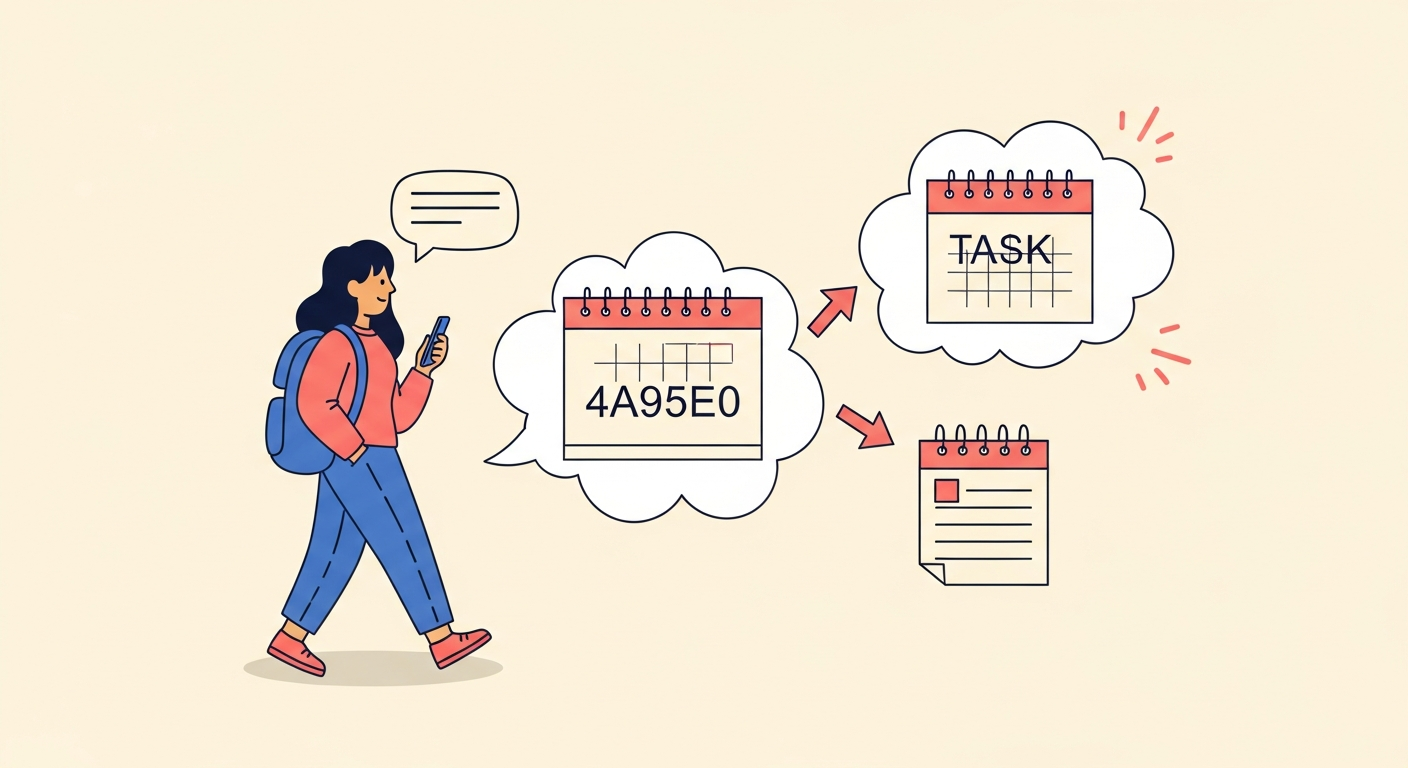
a voice-first AI assistant can do both. you talk, the way you'd talk to a friend, in one messy paragraph if that's what's in your head. the assistant does the sorting: this part's a task, this part's an appointment, this part's just an idea worth keeping. you don't manage a system. the system works because you didn't have to build one.
enkily: speaking your thoughts into action (and memory)
this is what Enkily is built to do. you speak one rambling thought — pick up milk, call the dentist tomorrow at 2, and don't forget that idea about the birthday gift — and Enkily splits it apart. the task goes to Apple Reminders or Todoist. the appointment goes to Apple Calendar. the idea gets kept as a note. you didn't sort anything. you just talked.
this is different from asking Siri to set a reminder. Siri handles one clean instruction at a time. Enkily is built for the way ADHD thoughts actually show up: several things tangled together, said out loud in one breath, in whatever order they occurred to you. it untangles that mess so you don't have to.
but the sorting is only half of it. every thought you speak into Enkily also gets kept in a searchable memory, not just filed away and forgotten. that's the second brain part. Enkily is live on the App Store for iOS, with a 7-day free trial, and it's $7.99 a month or $69 a year after that.
beyond tasks: a memory you can ask questions
the part that makes this a second brain, and not just a better to-do app, is what happens after something gets captured. you don't need to remember which app you put a thought in, or what exact words you used, or whether you wrote it down at all.
you can ask Enkily directly. what did i say about the dentist? what was that idea i had on tuesday? the memory holds onto everything you've said, searchable, so retrieval doesn't depend on your own recall. that's the piece traditional PKM systems never solved for ADHD, because they put the burden of finding things back on you, the same brain that struggled to file them in the first place.
reducing that load is the actual point. not a tidier notes app. a place where thoughts go in easily and come back out just as easily, without you having to remember the system at all.
an AI second brain for ADHD isn't about organizing better. it's about needing to organize less, and still being able to find what you said.