research on adhd tells us working memory is often the bottleneck. thoughts, ideas, and tasks can disappear before you get the chance to write them down. that's not a discipline problem. it's a working memory problem, and it means you can end up feeling constantly behind on things you technically already thought of.
this post is about that specific failure point: the gap between having a thought and capturing it. and about a way to close that gap with a voice-first ai memory that catches the thought, sorts it, and remembers it for you.
the struggle: when good ideas vanish into thin air
you're driving, or in the shower, or half-listening in a meeting, and a thought shows up. call the dentist back. that idea for the project. don't forget mom's birthday is next week. for a few seconds it's vivid. then something else happens, a text, a turn signal, someone asks a question, and it's gone.
this isn't rare. it's the default mode for a lot of adhd brains, because working memory is the system that's supposed to hold information active while you do something else with it. when that system is taxed, the thought doesn't get filed anywhere. it just drops.
the frustration compounds. you don't just lose the thought, you lose confidence that you'll remember to write things down next time, which makes you either over-monitor everything (exhausting) or give up on capturing altogether (worse).
why 'just write it down' isn't enough
the standard advice is to carry a notebook, or use your phone's notes app, or set a reminder. all reasonable in theory. in practice, each one adds a step between the thought and the capture, and every extra step is a chance for the thought to slip.
opening a notes app means unlocking your phone, finding the app, tapping into a field, and typing something coherent enough to make sense later. that's four decision points before you've captured anything. a notebook means having the notebook, having a pen, and stopping what you're doing.
basic dictation helps a little, but it usually just transcribes. it doesn't know that the first sentence was a task, the second was an appointment, and the third was just a stray idea you wanted to keep. so you end up with a wall of text that's technically captured but still needs to be read, parsed, and manually filed later. that filing step is its own barrier, and it's often the one that never happens.
a better way: your personal ai memory
the fix isn't a better notebook. it's removing the steps between the thought and the capture, and removing the steps between capturing and organizing.
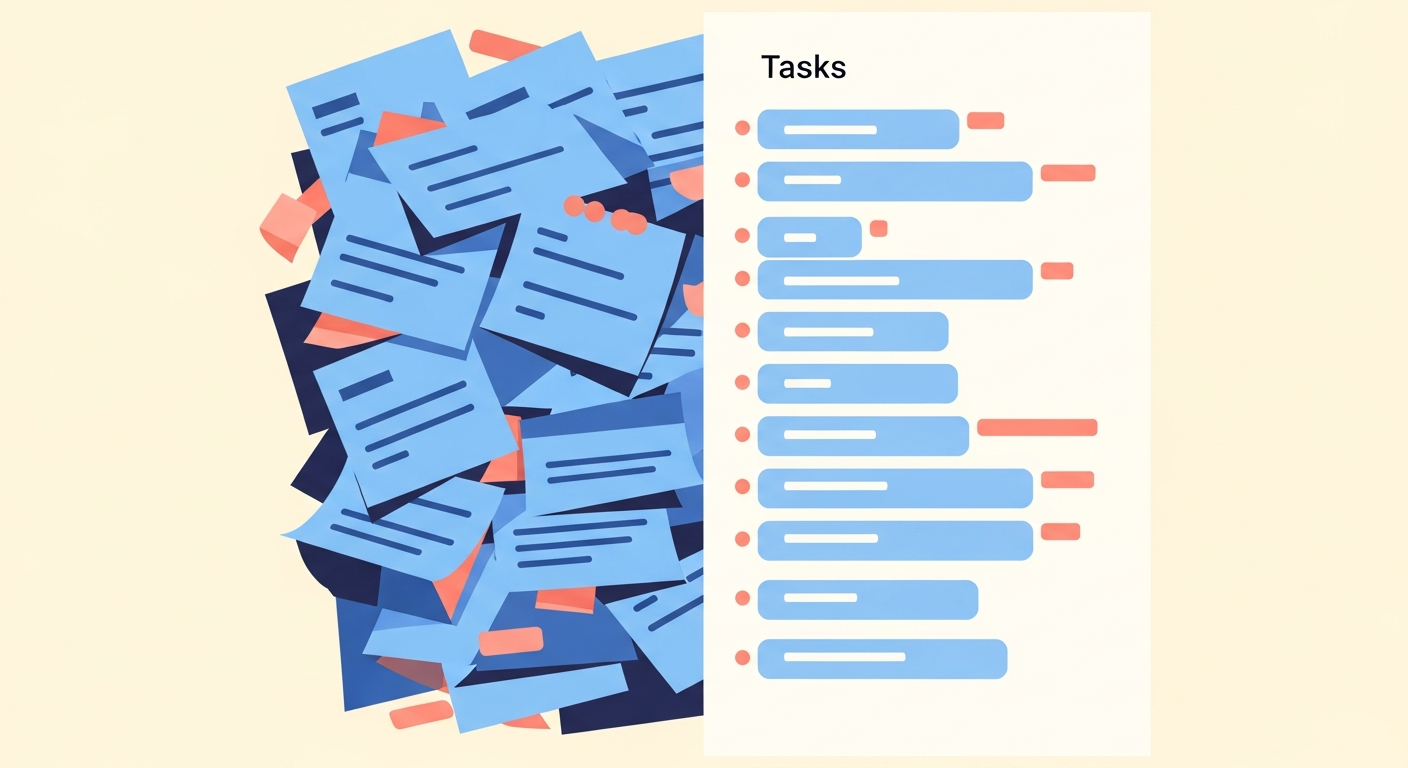
enkily is built around that idea. it's a voice-first capture app: you speak, out loud, in whatever order the thoughts come out. one rambling minute might include a task, a meeting time, and a random idea you want to remember. enkily listens to the whole thing and does the sorting for you.
this matters for adhd specifically because it doesn't ask you to slow down, organize your thoughts first, or pick a category before you talk. you just talk. the sorting happens after, which is the opposite of how most productivity tools work.
how enkily turns rambles into retrievals
here's what actually happens. you open enkily and talk, the same way you'd talk to a friend catching them up on your day: "remind me to call the pharmacy tomorrow, i've got that dentist thing at 2 on thursday, and i had an idea for the birthday present, maybe the record player."
enkily splits that into pieces. the pharmacy call becomes a task. the dentist appointment becomes a calendar event. the birthday present idea becomes a note. each piece routes automatically, tasks to apple reminders or todoist, events to apple calendar, so you're not manually sorting anything after the fact.
that's the capture half. the other half, the part most tools skip, is that enkily keeps a searchable memory of everything you've said. so later, when you vaguely remember mentioning something about the dentist but can't recall what, you can ask enkily directly: "what did i say about the dentist?" and get an answer.
this is complementary to things like siri, not a replacement. siri is great at setting one reminder when you already know exactly what you want. enkily is for the messier, more realistic version: the paragraph where three different things are tangled together and you just need it all sorted out and remembered.
enkily is live on the app store for iphone. it's $7.99 a month or $69 a year, with a 7-day free trial.
more than capture: finding what you said, fast
capture is only half the problem. the other half is retrieval, being able to find what you said later without re-reading a pile of old notes.
this is where a searchable ai memory changes the math. instead of scrolling through weeks of notes trying to find the one where you mentioned a gift idea, you ask a direct question and get a direct answer. it works like a personal assistant that was actually paying attention the whole time, because it was.
for adhd brains especially, this reduces a specific kind of load: the anxiety of not trusting your own memory, plus the effort of digging through disorganized files to prove yourself right. when retrieval is easy, capture stops feeling risky. you stop worrying about whether you'll ever see that note again, because you know you can just ask.
the goal isn't a bigger to-do list. it's a memory system that holds onto things so you don't have to, and hands them back the moment you need them.
if thoughts keep disappearing before you get the chance to act on them, the fix isn't trying harder to remember. it's having somewhere to talk that catches everything and sorts it out for you. enkily is built for exactly that gap, and it's available now on the app store.