you're driving, or in the shower, or half-listening in a meeting, and a thought lands. call the dentist. pick up the thing for your kid's project. that idea for the pitch deck. you tell yourself you'll remember. by the time you're near your phone, it's gone. not faded, gone. you know you had a thought. you can't tell what it was.
this is adhd task capture's actual failure point: not the to-do list, the gap before the to-do list. the direct fix is removing every step between the thought and getting it out of your head, and then trusting the sorting to happen after, not before.
why the gap is the whole problem
working memory has a short shelf life. that's not a character flaw, it's how the system works for everyone, and it's tighter for adhd brains. the thought you have right now is competing with the next five thoughts for a slot that's already full. if capturing it requires opening an app, picking a list, typing it out, and deciding if it's a task or a reminder or a note, you've lost the race before you've started.
most task apps are built for people who already know what bucket a thing belongs in. open app, tap list, type task, set date, save. that's four decisions before the thought is even down. adhd task capture without the friction means getting to zero decisions before capture, and pushing every decision to after.
what people try, and why it doesn't stick
the usual fixes all add a step somewhere:
- sticky notes everywhere. fast to write, but they don't get looked at again. the note says "call dentist" and you find it three weeks later under a coffee cup.
- a notes app catch-all. low friction to write into, but it becomes a graveyard. nothing routes anywhere, nothing reminds you, and finding the one thing you need means scrolling a wall of text.
- a strict bullet journal or list system. works if you maintain it. maintaining it is the first thing to go when you're overwhelmed, which is exactly when you need it most.
- Siri for reminders. genuinely fast for one clean thing. "remind me to call the dentist at 3" works great. but real thoughts aren't that clean. they're "gotta call the dentist, also need to grab the poster board for emma's project by friday, and remind me to look at that vendor thing before the call tuesday": three tasks and a date, tangled in one breath. Siri isn't built to untangle that.
every one of these fails at the same point: the system asks you to sort before you capture. sorting is the part adhd brains struggle with when the thought is hot and everything else is loud.
what actually works: capture first, sort after
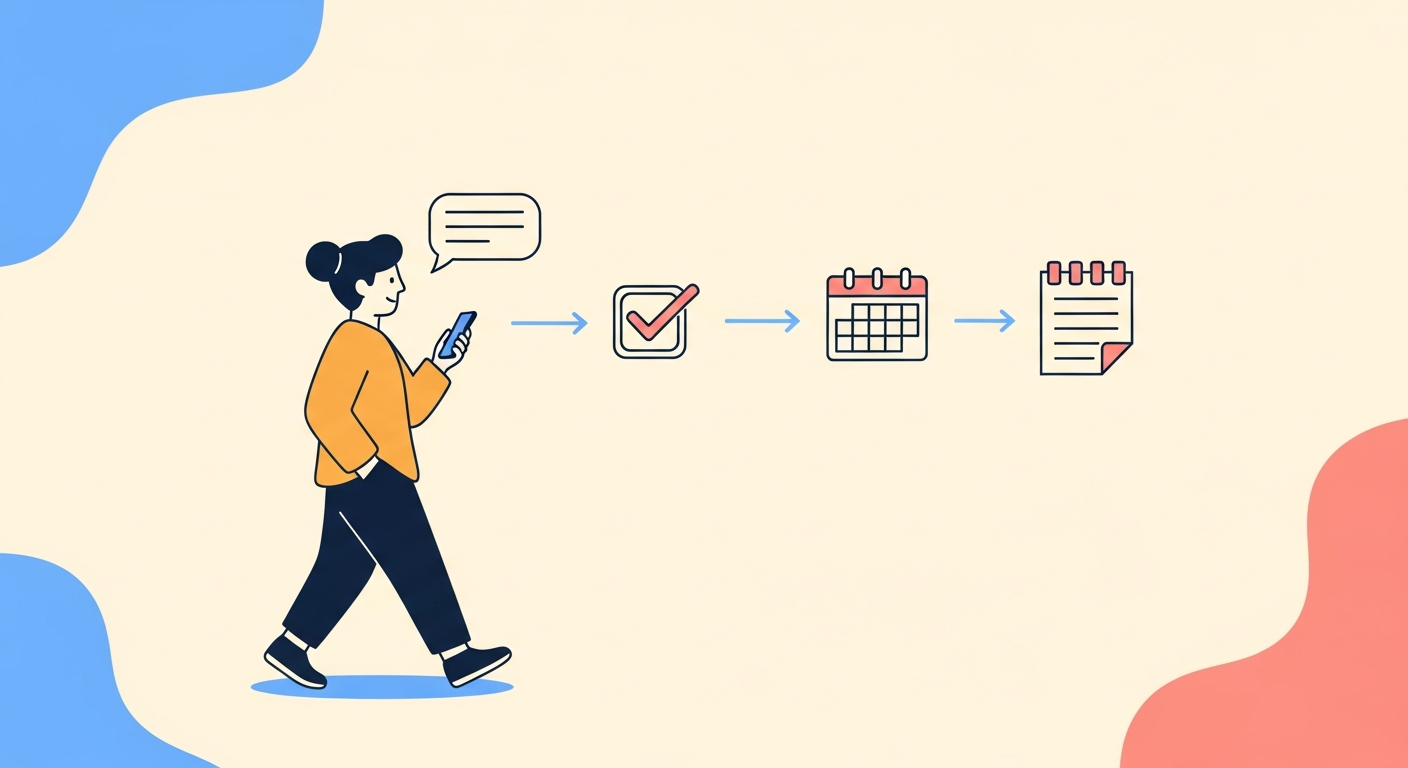
the fix is voice. not because voice is trendy, but because talking has zero setup. you don't open a list, you don't choose a category, you just say the thing. that's the whole interaction.
this is what Enkily does. you say the rambling thought exactly as it came to you:
"call the dentist tomorrow morning, also need to grab poster board for emma's project by friday, and remind me to check the vendor pricing before the call tuesday at 2"
Enkily splits that into three separate items and routes each one where it belongs: the dentist call and the poster board go to Apple Reminders or Todoist as tasks, the tuesday call goes to Apple Calendar as an event with the time attached. you didn't pick a list. you didn't decide what was a task versus a reminder versus a note. you just talked.
the other half of this, the part most capture tools skip entirely, is that the thought doesn't vanish once it's sorted. weeks later you can ask "what did i say about the dentist?" and get the answer back. that's the retrieval piece. capture without a way to find things later just moves the losing-the-thought problem downstream. you remember you captured something, you just can't find it, which feels almost as bad as never capturing it at all.
none of this replaces the apps you already use. Enkily isn't trying to be your reminders app or your calendar. it's the layer in front of them that catches the messy version of a thought and puts the clean version where it needs to go, then keeps a copy you can search.
the point of low friction
low friction isn't a nice-to-have feature, it's the entire mechanism. every added tap, every category you have to pick, every "which list does this go in" is a chance for the thought to slip before it's saved. adhd task capture without the friction means the only step is opening your mouth.
you don't need a better memory. you need less standing between the thought and getting it out of your head, and a way to find it again once it's there.
Enkily is live on the App Store for iOS, $7.99/month or $69/year, with a 7-day free trial.